Program Outline

Bachelor of Science (B.Sc) in Nursing

  • Duration: 4 Years (8 Semesters), including Internship
  • Affliation: The State Government of Karnataka, Karnataka State Nursing Council, Indian Nursing Council, Karnataka State Higher Education Council and University Grant Commission (UGC)
  • Campus: Electronic City (EC) Campus
  • Admission Test: PES University Entrance Test
Register for Admissions

Bachelor of Science (B.Sc) in Nursing

The B.Sc. nursing degree program is a four-year fulltime program comprising eight semesters, which prepares B.Sc. nursing graduates qualified to practice nursing and midwifery in a variety of settings in either public/government or private healthcare settings.

It adopts credit system and semester system as per the Authority guidelines. The program encompasses foundational, core and elective courses.This is achieved through learning in skill lab/simulated lab and clinical environment. Simulation will be integrated throughout the curriculum wherever feasible to enable them to develop competencies before entry into real field of practice.

The aims of the B.Sc. Nursing program are to produce knowledgeable and competent nurses and midwives with critical thinking, caring, motivation, assertiveness, and discipline; prepare them to provide promotive, preventive, curative, and rehabilitative healthcare services in all healthcare settings; enable them to make independent decisions within their scope of practice, protect individual and group rights, conduct nursing research, and apply evidence-based practice; and prepare them for roles as practitioners, teachers, supervisors, and managers.

Nursing as a profession and a discipline utilizes knowledge derived from arts, sciences (physical, biological and behavioral), humanities and human experience. Nursing science incorporates clinical competence, critical thinking, communication, teaching learning, professionalism, and caring and cultural competency. Nurses collaborate with other health disciplines to solve individual and community health problems. Nursing facilitates evidence-based practice, compassionate caring among its practitioners in response to emerging issues in healthcare and new discoveries and technologies in profession. Nursing practice requires personal commitment to professional development and life-long learning.

Simulation will be integrated throughout the curriculum wherever applicable to enable them to develop competencies before entry into real field of practice. B.Sc nursing provides nurses with excellent career prospects and employment opportunities.


Objectives of the Program

  • To develop critical thinking, clinical reasoning and professional competence for the provision of safe, effective and patient-centred nursing care.
  • To develop the ability to apply evidence and research findings in nursing practice and quality improvement.
  • To prepare competent, ethical and accountable professional nurses to provide holistic, safe and evidence-based care across diverse healthcare settings.
  • To promote lifelong learning, continuing professional development, self-reflection and professional growth.
  • To develop leadership, clinical decision-making, communication, teamwork and collaboration skills for effective professional practice.
  • To demonstrate effective communication and collaborative practice with patients, families and members of the healthcare team.
  • To promote patient safety, quality improvement and ethical professional nursing practice.
  • To use health information, technology and appropriate digital resources to support nursing practice and learning.

Eligibility Criteria

  • The candidate must be at least 17 years of age as on 31 December of the year of admission. The maximum age limit for admission is 35 years.
  • The candidate must have passed Physics, Chemistry, Biology and English individually at the 10+2/II PUC level. and must have obtained a minimum of 45% aggregate marks in Physics, Chemistry and Biology (PCB) is required in the qualifying examination.
  • Candidates belonging to SC/ST/OBC categories shall meet the applicable minimum PCB eligibility criteria as prescribed by affiliated regulatory bodies and the applicable government reservation/admission policy. 6 papers together in the qualifying examination.
  • The candidate must be medically fit.

Key differentiators of this program at PESU

  • Setting a New Benchmark in Nursing Education — PESU Institute of Nursing proudly holds the distinction of being the first single institution to receive INC approval for 300 B.Sc. Nursing seats.
  • Experienced and Highly qualified nursing faculty with expertise in nursing education, clinical practice and student mentoring.
  • Technology-enabled classrooms and digital learning resources to support interactive teaching, learning and academic activities.
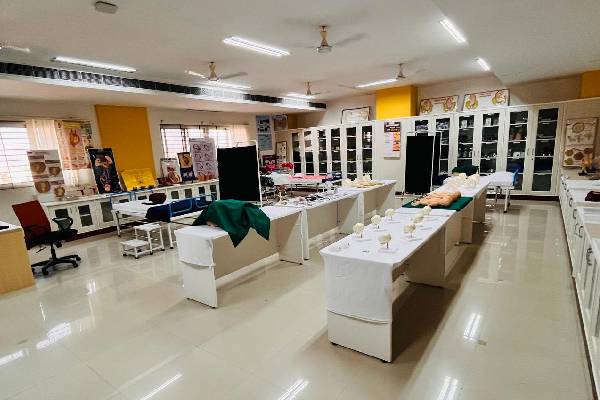
  • Well-equipped nursing laboratories, skill-learning facilities and simulation-based learning environments that support competency development.
  • Clinical learning is supported by access to the PES healthcare ecosystem, including a parent/teaching hospital and specialty clinical areas, providing opportunities for supervised clinical learning.
  • Competency-based nursing education integrating classroom learning, skill laboratory, simulation and clinical practice.
  • Structured clinical exposure across diverse healthcare specialties and community settings.
  • Simulation and skills-based learning to develop nursing competencies before and alongside supervised clinical practice.
  • Research-informed learning with opportunities for evidence-based nursing practice and interdisciplinary learning within a multidisciplinary healthcare environment.
  • Career orientation and placement support through PES University's centralized placement system.
  • PES University provides a structured one-to-one student mentorship programme to support the holistic development and academic success of students. Each student is assigned a mentor who provides personalized guidance on academics, time management, professional development, networking, career preparation, and overall student growth. Mentoring sessions help students set goals, monitor their progress, identify areas for improvement, and plan meaningful academic and co-curricular activities. The programme also encourages students to build their professional profiles through certifications, workshops, research, internships, and professional networking.
  • PES University is committed to providing every student with a safe, welcoming and supportive campus environment. Our dedicated Anti-Ragging Committee works proactively to promote a respectful campus culture and ensure that every student feels secure, valued and comfortable throughout their university journey.

Pedagogy Method

Classroom & Interactive Learning

  • Interactive lecture–discussion
  • Small-group discussion
  • Problem-based learning
  • Case-based learning
  • Seminars & symposia
  • Workshops
  • Panel discussions
  • Debates
  • Role play
  • Field/ Educational Institutions visit

Skill Laboratory & Simulation

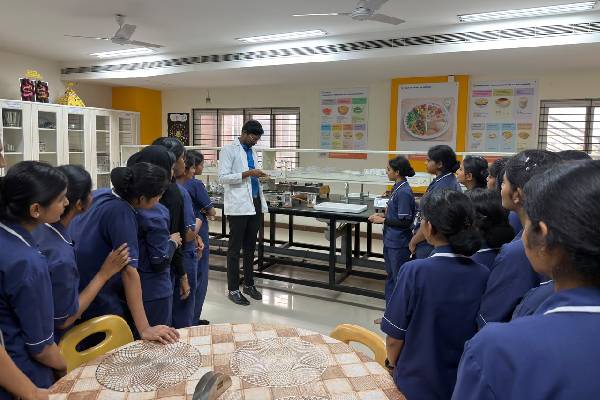
  • Skills demonstration
  • Guided practice and return demonstration
  • Simulation-based learning
  • Clinical scenarios
  • Mock drills
  • Role play
  • Pre-clinical skill preparation
  • High-fidelity simulation

Clinical Education

  • Clinical teaching
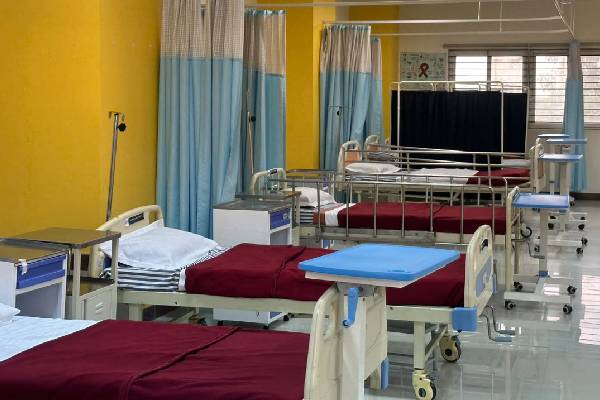
  • Bedside demonstration
  • Case presentations
  • Case-based learning
  • Nursing rounds
  • Incidental teaching
  • Health education/talks
  • Supervised clinical practice
  • Field/community experiences

Digital & Self-Directed Learning

  • Information and Communication Technology (ICT) enabled teaching
  • PESU Academy
  • Recorded classroom sessions
  • Digital learning resources
  • Online question banks and MCQs
  • Digital references
  • Online academic discussion/forums

Assessment & Competency Evaluation

  • Objective Structured Clinical Examination (OSCE)
  • Direct Observation of Procedural Skills (DOPS)
  • Practical/skill assessment
  • Case-based discussion
  • Viva voce
  • Clinical logbook
  • Competency assessment
  • Workplace-based assessment, where applicable
  • Hybrid examination system

Physical Infrastructure

I. Academic Facilities

  • Lecture Hall
  • Skill Lab/Simulation Laboratory
    • Nursing Foundation including Adult Health Nursing & Advanced Nursing Lab
    • Community Health Nursing & Nutrition Lab
    • Obstetrics and Gynaecology Nursing Lab
    • Child Health Nursing Lab
    • Pre-Clinical Science Lab
  • Computer Lab
  • A.V. Aids Room
  • Multipurpose Hall
  • Library

II. Clinical Facilities

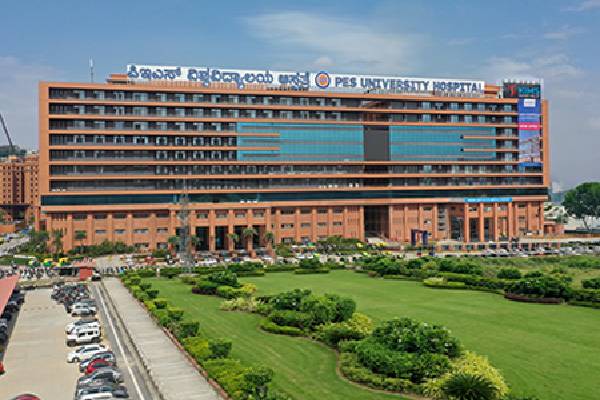
  • PES University Institute of Medical Science and Research — Learn Where Healthcare Happens. With our own 1250-bedded parent hospital on campus, students gain unparalleled exposure to diverse clinical experiences.
  • Outreach Program - Urban and Rural Primary Health Centre

III. Recreational Facilities

  • Gym
  • Yoga
  • Racquet Sports

Programme Highlights & Opportunities

  • Patient centered care: Provide holistic care recognizing individual patient's preferences, values and needs, that is compassionate, coordinated, age and culturally appropriate safe and effective care.
  • Professionalism: Demonstrate accountability for the delivery of standard-based nursing care as per the Council standards that is consistent with moral, altruistic, legal, ethical, regulatory and humanistic principles.
  • Teaching & Leadership: Influence the behavior of individuals and groups within their environment and facilitate establishment of shared goals through teaching and leadership.
  • System-based practice: Demonstrate awareness and responsiveness to the context of healthcare system and ability to manage resources essential to provide optimal quality of care.
  • Health informatics and Technology: Use technology and synthesize information and collaborate to make critical decisions that optimize patient outcomes.
  • Communication: Interact effectively with patients, families and colleagues fostering mutual respect and shared decision making to enhance patient satisfaction and health outcomes.
  • Teamwork and Collaboration: Function effectively within nursing and interdisciplinary teams, fostering open communication, mutual respect, shared decision making, team learning and development.
  • Safety: Minimize risk of harm to patients and providers through both system effectiveness and individual performance.
  • Quality improvement: Use data to monitor the outcomes of care processes and utilize improvement methods to design and test changes to continuously improve the quality and safety of healthcare system.
  • Evidence based practice: Identify, evaluate and use the best current evidence coupled with clinical expertise and consideration of patient's preferences, experience and values to make practical decisions.

Who should pursue this program?

  • Students interested in a professional career in nursing and healthcare may consider the B.Sc. Nursing programme.
  • Students motivated to contribute to patient care, health promotion, disease prevention and community wellbeing may find nursing a suitable career.
  • Students who value compassionate, respectful, ethical and patient-centred care.
  • Students willing to develop clinical skills through laboratory, simulation and supervised clinical practice.
  • Students interested in communication, teamwork, leadership and lifelong professional learning.
  • Candidates who want to take up jobs as Nursing Advisors to the Indian Government, Supervisors, Teachers and Nursing Superintendents, Clinical nurse in government or private hospitals, clinics and other health departments. Nurse educators in nursing colleges, training institute’s hospitals, etc. Nurse researchers in research institutes and health care companies and Nurse Managers or administrators in hospitals, IT nurses in IT sector.

Future Career Prospects after Completing the B.Sc. Nursing Program

On completion of the B.Sc nursing programme the graduates can have following career opportunities open to them:

  • Hospitals & Clinical Healthcare
    • Staff Nurse / Clinical Nurse
    • Critical Care Nurse
    • Emergency & Trauma Nurse
    • Operation Theatre Nurse
    • Medical-Surgical Nurse
    • Paediatric Nurse
    • Obstetric & Gynaecological Nurse
    • Oncology Nurse
    • Cardiac Care Nurse
    • Dialysis Nurse
    • Infection Control Nurse
    • Nurse Educator
  • School Health Services
    • School Health Nurse
    • School Wellness & Health Promotion Roles
    • Student Health Services
  • Industrial & Occupational Health
    • Occupational Health Nurse
    • Industrial Health Nurse
    • Corporate Wellness Roles
    • Workplace Health & Safety Services
  • Public & Community Health
    • Public Health Nurse
    • Community Health Nurse
    • Primary Healthcare Services
    • National Health Programme Roles
    • Community Outreach & Health Promotion
  • Nursing Education
    • Nursing Tutor
    • Clinical Instructor
    • Skills Lab Instructor
    • Simulation-Based Nursing Education
  • Research & Quality
    • Nursing Research Roles
    • Clinical Research Roles
    • Healthcare Quality & Patient Safety
    • Clinical Audit & Accreditation Support
  • Digital Health & Healthcare Technology
    • Health Informatics Nurse
    • Digital Health Roles
    • Telehealth / Telemedicine Nurse
    • Electronic Health Record (EHR) Roles
    • Clinical Data & Information Management
  • Healthcare Management & Other Services
    • Nursing Administration
    • Patient Care Coordinator
    • Home Healthcare Nurse
    • Healthcare Programme Coordinator
    • NGO & Healthcare Organization Roles

Placement Opportunities , Career Development & Assistance

PES University provides dedicated placement and career support to nursing students through its centralized placement system, helping them confidently transition from undergraduate education to professional nursing practice. The placement cell at PES University

  • Career Guidance & Orientation: Students receive guidance on diverse career pathways in clinical nursing, community health, nursing education, management, research and other healthcare settings. Regular career-orientation programmes help students understand evolving healthcare workforce expectations, employer requirements and professional opportunities.
  • Employability Development: Students are supported in developing professional communication, interpersonal, interview and workplace-readiness skills essential for a successful career in healthcare. Training and guidance help students understand professional expectations and prepare effectively for recruitment and workplace environments.
  • Placement Assistance: The University facilitates access to relevant employment opportunities with hospitals, healthcare organizations and other appropriate employers. Placement support includes career information and connections with potential employers, subject to organizational requirements, vacancies and selection processes.