- Well qualified and experienced Doctors: PES University medical facility and college has the most well qualified and experienced doctors working on campus which will be a great advantage for all our students
- Higher Studies Options: PES University will provide option for higher education for its students with benefits after their UG education as we have a full plethora of courses across domains to offer.
-
State-of-the-Art Facilities:
PES University Electronic City campus where the program is
offered
has state of the art, world class facilities as below...
- Cutting edge labs
- NMC approved infrastructure and facilities
- Procedure centres relevant to all specializations
- World class cutting edge medical equipment’s
- Well stacked library with digital databases
- State of art multidisciplinary research centre
- Hostel facilities for both boys and girls
- Transportation facilities
- World class sports and recreation facilities on campus

Eligibility
Academic Eligibility:
Other Admission Requirements:
Lateral Entry:
Direct second-year entry is available for candidates who have completed a recognized Diploma in Emergency Medical Services / Emergency Care or an equivalent program, subject to PES University regulations, equivalence of subjects and approval of transfer credits.
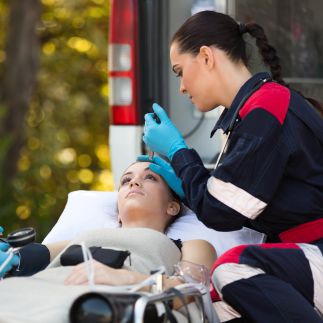
Emergency Medical Technology is a healthcare profession focused on the assessment, stabilization and initial management of patients during medical and traumatic emergencies, particularly before and during transport. The program prepares students for emergency and prehospital care through a combination of academic learning, simulation, hospital clinical training and ambulance-based exposure.
The Bachelor of Emergency Medical Technology (Paramedic) is a four-year undergraduate professional program comprising three years of academic and clinical education followed by one year of compulsory rotatory internship. The program is a practice-oriented pathway into emergency, prehospital and critical-care environments.
Why Study this Program at PES University?

Who Should Pursue This Program?
The Bachelor of Emergency Medical Technology (Paramedic) program is ideal for students who are passionate about emergency and prehospital care, trauma response, and critical healthcare delivery. It is suited for individuals who thrive under pressure, are quick decision-makers, and are committed to making a difference during medical emergencies. Graduates are prepared for careers across emergency departments, ambulance services, disaster response, and critical care environments.
Roles & Responsibilities of an EMT
01
Rapid assessment of patients during medical and traumatic emergencies.
02
Primary stabilization and appropriate emergency interventions.
03
Airway management, CPR, resuscitation and basic-to-advanced emergency procedures within scope of practice.
04
Triage and prioritization of patients.
05
Safe preparation, monitoring and transportation of patients.
06
Operation and safe handling of emergency medical equipment.
07
Effective communication with patients, relatives and multidisciplinary healthcare teams.
08
Support during mass-casualty incidents, disasters and other emergency responses.
09
Accurate documentation, handover and continuity of emergency care.
Academic Structure
Duration:
4 years — 3 years of academic/clinical education + 1 year of compulsory rotatory internship.
Total structure:
8 semesters, comprising 6 academic semesters followed by 2 internship semesters.
Odd semester:
approximately June/July to November/December.
Even semester:
approximately December to April/May.
Medium of instruction and examinations:
English.
Attendance requirements:
75% in theory and 80% in skill training, subject to final university regulations.

Clinical Exposure
Simulation & Skills Training
High-fidelity and procedure-based simulation.
Airway management and intubation practice.
CPR and resuscitation training.
Patient assessment and monitoring.
Emergency equipment familiarization.
Trauma and procedural skills training.
Team communication and emergency response simulations.
Structured skills practice before and alongside clinical exposure.
Placement Opportunities & Career Assistance
Placements are a key strength of PES University. Students receive comprehensive career support through the centralized placement cell, including training in communication skills, aptitude, professional etiquette, resume building, and interview preparation from the first semester onwards.
Graduates can pursue careers as:
Year-wise Curriculum Structure
| Subjects |
|---|
| Human Anatomy |
| Physiology |
| Biochemistry I |
| Pathology I |
| Microbiology I |
| Subjects |
|---|
| Introduction to Emergency Medical Services |
| Emergency Department Equipment |
| Emergency Department Pharmacology |
| Subjects |
|---|
| Medical Emergencies |
| Medical Emergencies |
| Emergencies in paediatric and special population |
*In addition to the main subjects mentioned above, there will be other additional subjects/ electives as a part of the curriculum as well as practical tests and lab components every year.
**Curriculum structure is subject to change without prior notice based on the recurring norms of our university.

Future Career Prospects after completing the Program
Some of the future career prospects for the graduates of B.Sc. (Hons) Emergency Medical Technology students are as following
Graduates may also pursue further education and specialization in areas such as emergency management, healthcare administration, or advanced medical practice, enhancing their career prospects and opportunities for leadership roles in the field of emergency medical services.
Programme Highlights


Facilities & Campus Life
Emergency Department
Clinical exposure in a functional emergency-care environment.
Simulation & Skill Lab
Procedure mannequins, emergency simulations and hands-on skills training.
Laboratories
Dedicated teaching and practical learning environments.
Library & Digital Resources
Medical texts, journals and access to academic databases.
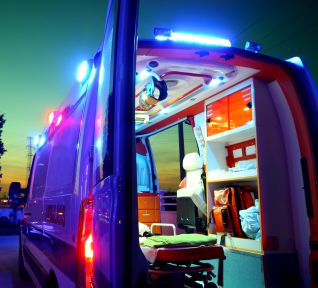
Ambulance Bay
Exposure to ambulance operations and emergency patient movement.
Sports & Fitness
Campus sports, recreation and student wellness.
Hostel Facilities
Residential facilities for students, subject to campus availability and policy.